By Skye Novis In-house Associate Nutritionist (ANutr)(BSc)
We hear a lot about eating a “balanced diet”, but what does that actually look like when it comes to the food on your plate?
The good news is that it does not need to be complicated. A balanced plate is simply about bringing together a mix of foods that help give your body the energy and nutrients it needs, while still making meals delicious, satisfying and enjoyable.
A simple way to think about it is:
And importantly, every meal does not need to look perfectly balanced. The UK Eatwell Guide is designed to reflect what we eat across a day or even a week, rather than every individual plate.¹
So instead of thinking about what you need to take away, we like to focus on what you can add in.
1. Start with plenty of plants
Fruit and vegetables are a brilliant place to start. They bring colour, flavour and texture to meals, while also providing fibre and a wide variety of vitamins and minerals.
UK guidance recommends eating at least five portions of a variety of fruit and vegetables each day, suggesting they should make up just over a third of the foods we eat overall.²
Fibre is especially worth paying attention to. Adults in the UK are recommended to eat around 30g of fibre a day, yet the latest National Diet and Nutrition Survey found that only around 4% of adults are meeting this recommendation.⁶
The good news is that fibre is found in so many delicious plant foods such as vegetables, fruit, beans, lentils, wholegrains, nuts and seeds all count.
Variety is just as important as quantity. Different plants provide different nutrients, so try mixing up colours and types across the week. Fresh, frozen and tinned fruit and vegetables can all count, making it easier to add plants in whatever way works for you.²
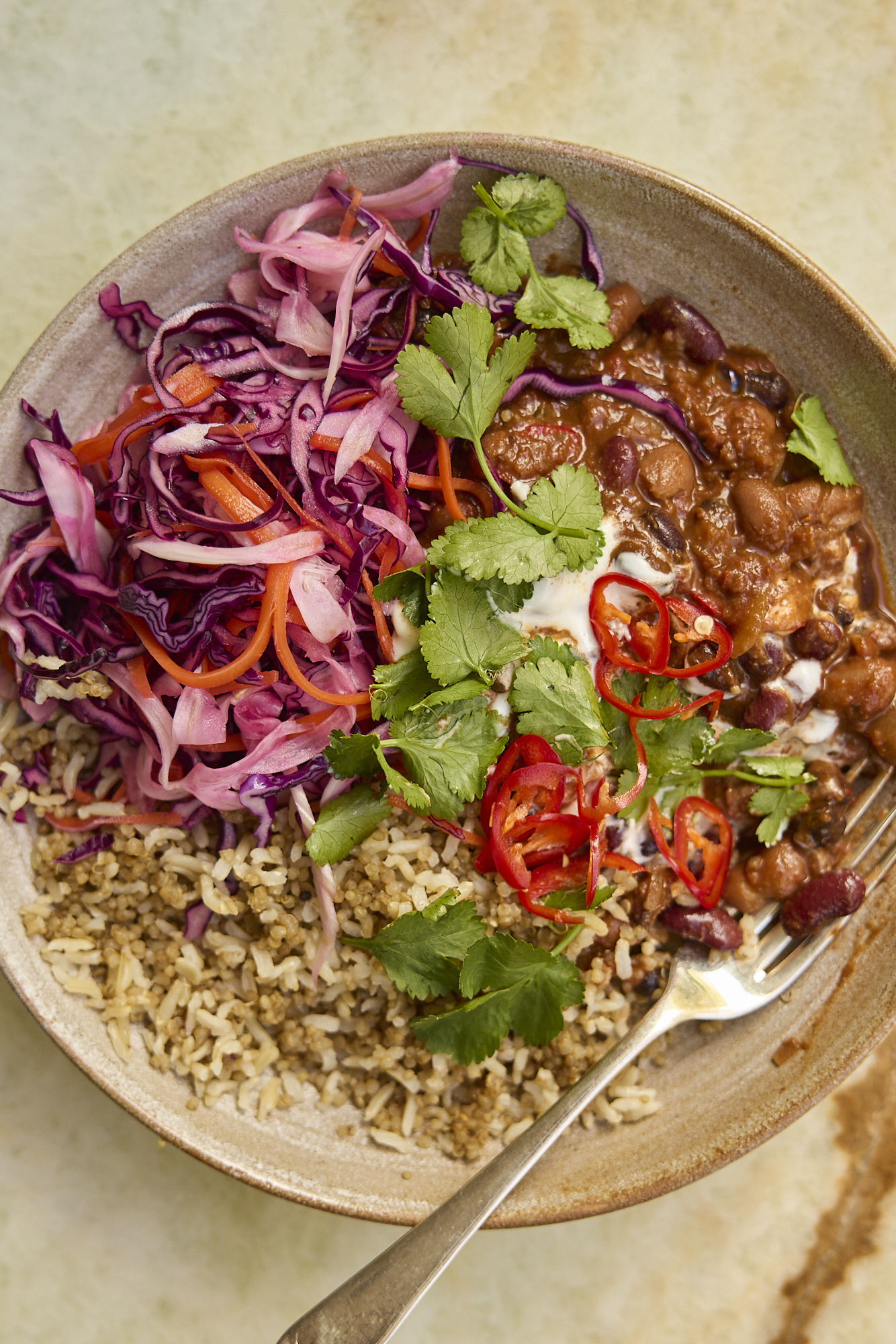
It does not have to mean complicated cooking either. Adding spinach to a curry, frozen peas to pasta, roasted vegetables to a grain bowl or berries to breakfast are all simple ways to build more plants into your meals.
2. Add a source of protein
Protein plays an important role in helping the body grow, maintain and repair its tissues.⁴
There are plenty of delicious plant-based sources to choose from, including beans, lentils, chickpeas, tofu, tempeh, peas, nuts and seeds.
One of the lovely things about plant proteins is that they often bring other nutrients with them too. Beans and lentils provide both protein and fibre, while nuts and seeds offer protein alongside unsaturated fats.
A well-planned plant-based diet can provide the protein we need, especially when we include a variety of protein-rich foods throughout the day.⁴
This could be as simple as adding chickpeas to a salad, lentils to a curry, tofu to a stir-fry or a spoonful of nut butter to breakfast.
3. Include carbohydrates for energy
Carbohydrates are an important source of energy and form a key part of a balanced diet.
Foods such as potatoes, bread, rice, pasta, oats and other grains can all have a place on the plate. Choosing wholegrain or higher-fibre options where possible can also help us get more fibre, vitamins and minerals.¹ ³
Think porridge oats at breakfast, wholegrain bread with lunch, brown rice in a grain bowl or potatoes with their skins left on are all ways to help increase fibre intake without making meals feel more complicated.
4. Don’t forget healthy fats
Fat is an important part of a balanced diet too. As well as providing energy, fats give us essential fatty acids that our bodies cannot make themselves and help us absorb fat-soluble vitamins, including vitamins A, D, E and K.³ ⁵
The type of fat we eat matters. We recommend choosing unsaturated fats, which are found in foods such as nuts, seeds, avocado, olives and olive or rapeseed oil. Replacing some saturated fats with unsaturated fats can help maintain healthy cholesterol levels and support heart health.⁵
Some plant foods, particularly walnuts, chia seeds and flaxseeds, also provide omega-3 fatty acids, which play a role in normal heart function and are important components of our cells.
A little can go a long way. A drizzle of olive oil over roasted vegetables, a spoonful of tahini in a dressing, avocado on toast or a handful of nuts and seeds sprinkled over a bowl can add flavour, texture and valuable nutrients to a meal.
As with everything on our plate, it is the bigger picture that matters. Rather than focusing too heavily on one nutrient, aim for a varied diet that includes a mix of nourishing foods across the day and week.
5. Keep it simple
Eating well should not feel like another thing to get perfect.
You do not need to measure everything out or make every plate look the same. Some meals will naturally contain more of one food group than another, and that is completely fine.
A few simple habits can make balanced meals easier:
Think about what you can add Could you add a handful of greens, a spoonful of seeds, some beans or an extra vegetable?
Choose higher-fibre options when you can Oats, wholegrain bread, brown rice, wholewheat pasta and potatoes with their skins are all easy ways to add more fibre.
Keep simple staples nearby Frozen vegetables, tinned beans and lentils, microwaveable grains, hummus and nut butters can make putting together a nourishing meal much easier on busy days.
Keep variety in mind You do not need to eat every nutrient at every meal. What matters more is the variety and balance of foods you enjoy across the day and week.¹
Make it delicious Herbs, spices, dressings, roasted nuts, seeds and fresh citrus can completely transform simple ingredients. Eating well should still be something you look forward to.
A few simple balanced meal ideas
 Membership
 Our Story